
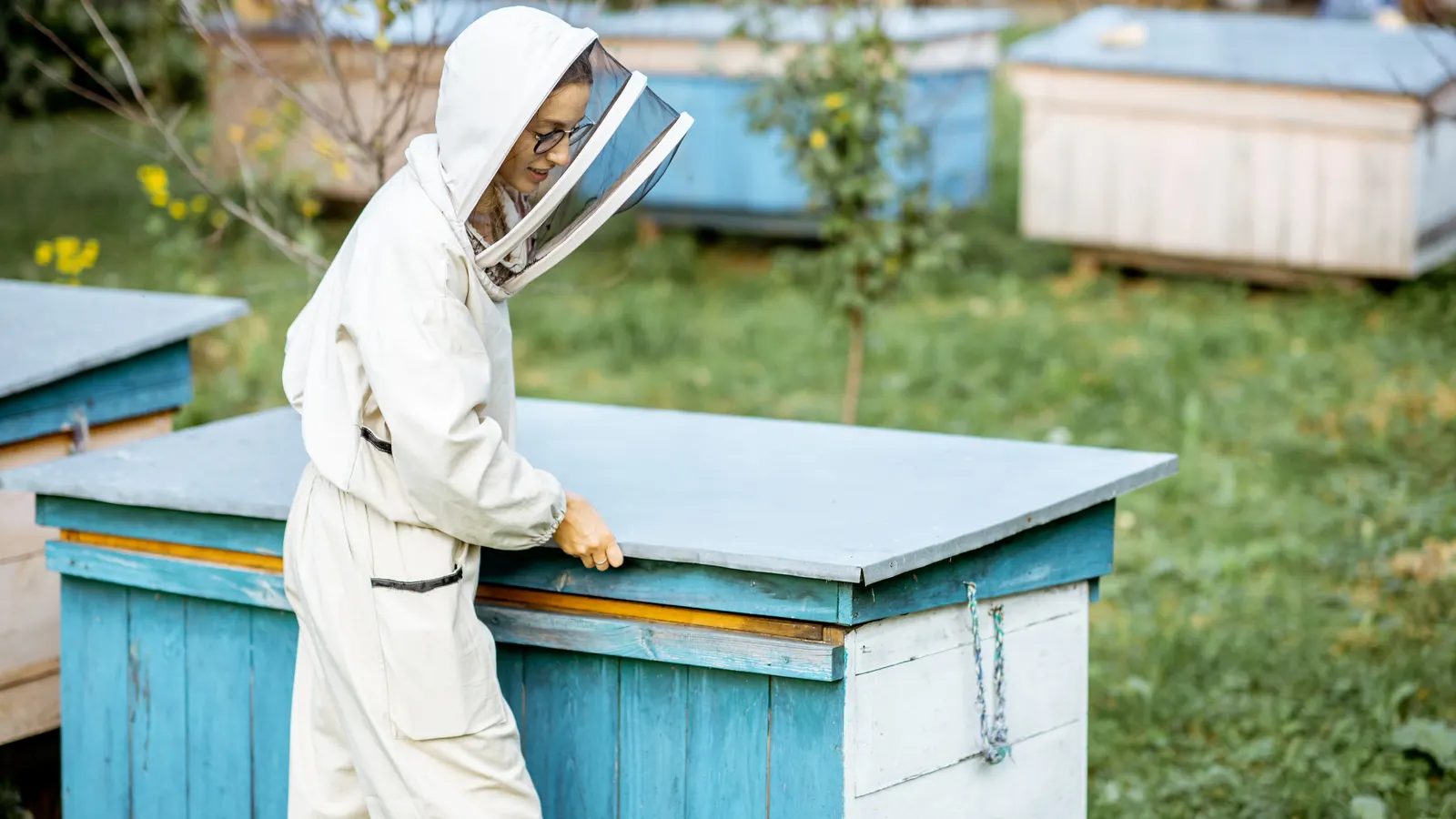
If you are starting out, what protects you most is a veil that closes properly, light and loose clothing, and sealed openings at the wrists, ankles and neck. A full suit is the safest choice for your first year; later you can step down to a jacket. Gloves and boots depend on your comfort and on how defensive your colonies are. This guide explains what each piece does, what you really need at each experience level, how to care for the clothing and when protection is not enough.
- The veil is the one piece you do not skip. A veil that zips to a jacket or suit is the safest, because once it is closed the bees cannot get in.
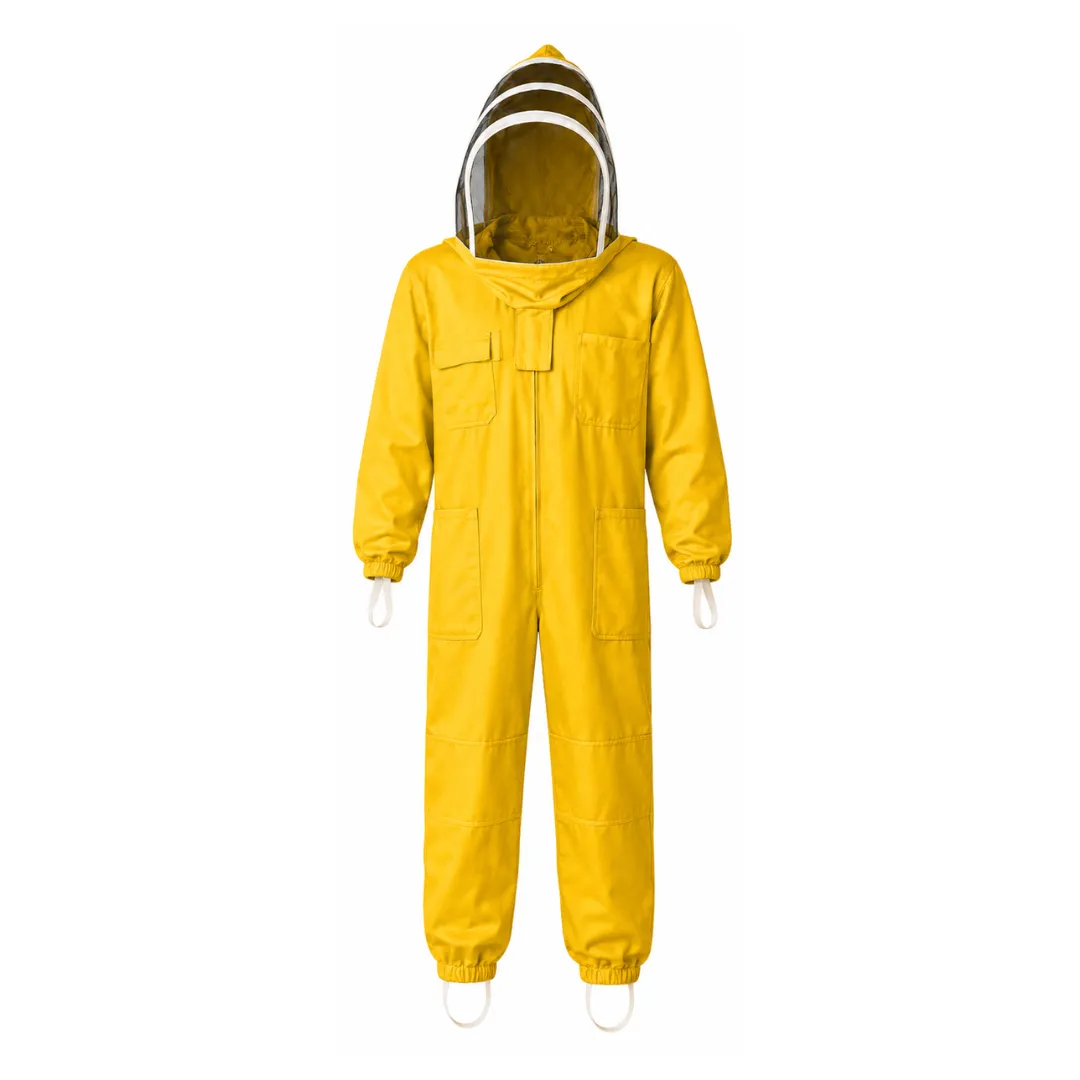
- For your first year, start with full protection: a full suit with fencing veil (RD$ 3,800.00) or a jacket with round veil (RD$ 2,900.00) plus light-colored pants and boots.
- Color and fit: light, smooth and loose. Avoid black, dark blue and sharp contrasts, and seal wrists and ankles.
- Heat: white cotton protects well but can be very hot. Work early or late in the day and look at ventilated options.
- Wash your gear often, with unscented detergent and no dryer: dried venom in the fabric can make bees more defensive.
What protective clothing does a beekeeper need?
A beekeeper needs to protect the head and face, the body, the hands and the feet, and to close every opening where a bee could reach the skin. Those are the four zones, and each piece covers one or more of them.
- Head and face: a veil, with or without a hat.
- Body: a one-piece suit, or a jacket with pants or a coverall.
- Hands: gloves, or bare hands once you have experience and calm colonies.
- Feet and ankles: boots or closed shoes that cover the ankle.
Texas A&M AgriLife Extension recommends starting with a full suit and moving to lighter options as you learn how stings affect you and how comfortable you are around hives. That is a good starting point, and it is the one this guide follows.
Full suit, jacket or coverall: which one do I choose?
In your first year, the full suit. Once you have practice and gentle colonies, a jacket with light pants is enough for most inspections.
According to Texas A&M, a suit covers the whole body and leaves only the feet and hands exposed; when it is properly sealed and combined with shoes and bee gloves, the beekeeper is fully covered. A jacket covers only the torso and head, but with good pants it can give adequate protection.
| Catalog piece | What it covers | Who it suits | Price |
|---|---|---|---|
| Cotton Full Body Beekeeping Suit with Fencing Veil | Whole body, head and face | First year, new colonies, anyone who wants maximum coverage | RD$ 3,800.00 |
| Cotton Beekeeper Jacket with Fencing Veil | Torso, arms, head and face | Beekeepers with some practice who wear light pants | RD$ 2,900.00 |
| Cotton Beekeeper Jacket with Round Veil | Torso, arms, head and face | Those who prefer a veil that rests on the head and gives a wide field of view | RD$ 2,900.00 |
| Criollo Coverall | Arms and legs | Combined with a veil or hat | RD$ 2,124.00 |
| Peruvian Veil | Head, face and neck | An add-on for those who already have thick work clothes | RD$ 1,100.00 |
Reference prices from the Quisqueya Hive catalog as of October 2026. Each product page lists its details; if you are unsure about your size, ask us on WhatsApp before buying.
Which veil is better: fencing, round or Peruvian?
The best veil is the one that closes without gaps, stays off your face and lets you see well. The type (fencing or round) is a matter of comfort; what really matters is how it attaches to the body.
- A veil that zips to a jacket or suit. Mississippi State Extension calls these the most protective: once zipped shut, bees cannot enter, and most keep enough clearance from the face. Texas A&M warns that a separate veil still leaves a chance for bees to get in. Our jackets and the full suit come with a fencing or round veil.
- Fencing veil. It stays arched and away from the face.
- Round veil. It rests on the head and gives a wide field of view. The La Tienda del Apicultor guide compares fencing, round and square styles and notes that each has trade-offs in fit, space and field of view.
- Loose or drawstring veil. Mississippi State explains that these are quick to put on and take off, but the strings can loosen during long sessions and leave a gap between the veil and the shirt. Our Peruvian veil (RD$ 1,100.00) is sold as a veil on its own; wear it over thick clothing and close the neck well.
Keep it off your skin
Mississippi State reminds us that bees can still sting through a veil that is pressed against the skin. Texas A&M suggests wearing a cap under hooded suits to keep the fabric off the face and protect the nose and chin, and a headband so sweat stays out of your eyes and your ears do not touch the sides of the veil.
The University of Georgia, in its bulletin on Africanized honey bees, recommends white-faced veils instead of black, because these bees are drawn to dark objects, and black inner netting to reduce glare. It is a useful detail if your colonies are very defensive.
Does the criollo hat work for beekeeping?
The criollo hat (RD$ 500.00) gives shade and is very comfortable in the Dominican sun, but by itself it does not protect your face from stings. Use it as an add-on together with a veil, not instead of one.
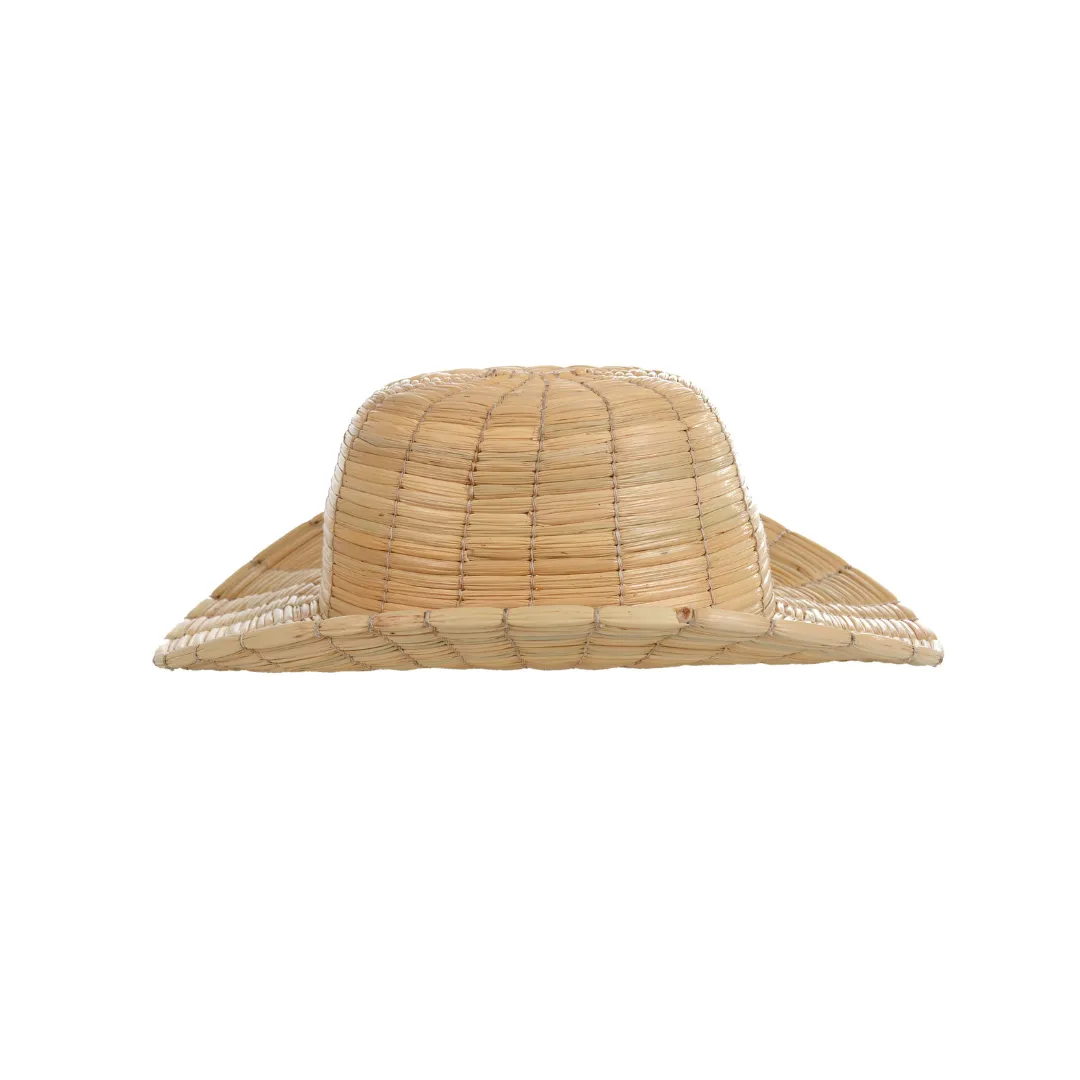
Texas A&M describes veils as a hat plus mesh; if your veil is worn with a hat, check that the whole set closes well around the neck. It is an inexpensive way to gain comfort in the sunny hours.
What color and fabric are best in the heat?
Choose clothing that is light, smooth and loose. Mississippi State asks for a long-sleeved shirt and white or khaki pants as a minimum, and for avoiding black, dark blue and sharp contrasts: according to that publication, areas of contrast with crisp borders, such as a black belt over light pants or a dark watch band, receive the most stings. White coveralls hide those lines.
Texture
The same publication says coarse fabric, such as heavy cotton, gives worker bees a rough surface to grab, while slick materials give them less grip. Even so, many good suits are cotton. What matters is that the suit does not cling to the body: Texas A&M recommends that, while suited, you can touch your toes without the suit pulling tight across your back or pulling the veil against your face.
Heat
Texas A&M and Mississippi State agree that cotton or canvas suits can be very hot in summer, and both mention ventilated layered-mesh options. In the Caribbean, heat is part of the job, so it helps to:
- Inspect early in the morning or late in the afternoon.
- Drink water before and after, and rest in the shade.
- Pick a size that leaves air between your skin and the fabric. The UF/IFAS publication on swarm removal even suggests one or two sizes larger than usual to keep the fabric away from the skin and reduce stings through the suit.
We did not find a source that measures temperature differences between fabrics, so we give no numbers. If heat worries you, it is a good question to ask us on WhatsApp before buying.
Do I need gloves? And boots?
Gloves are optional and boots are strongly recommended. Both depend on your experience and on how defensive your colonies are.
Gloves
We carry premium leather gloves with a long fabric cuff and a ventilated mesh band, in sizes XL and XXL (RD$ 700.00). Here are general criteria for choosing any glove, ours or not.
- Mississippi State says gloves are usually not necessary, but you should keep a pair with you in case bees are unusually defensive, and new beekeepers should wear them at least until they feel comfortable.
- Texas A&M describes beekeeping gloves as light in color, made of leather or goatskin, with long sleeves worn over the suit.
- Fit matters: tight gloves may mean stings on the knuckles, and oversized gloves reduce dexterity.
- Heavy gloves fill with sweat in summer and make delicate tasks like handling combs difficult, according to Mississippi State, which proposes a gradual transition: rubber dish gloves, then thin latex or nitrile gloves and finally bare hands.
- Texas A&M recommends replacing them every one to two years, because they absorb propolis, wax and honey, wear out and can carry disease from one colony to another.
Boots
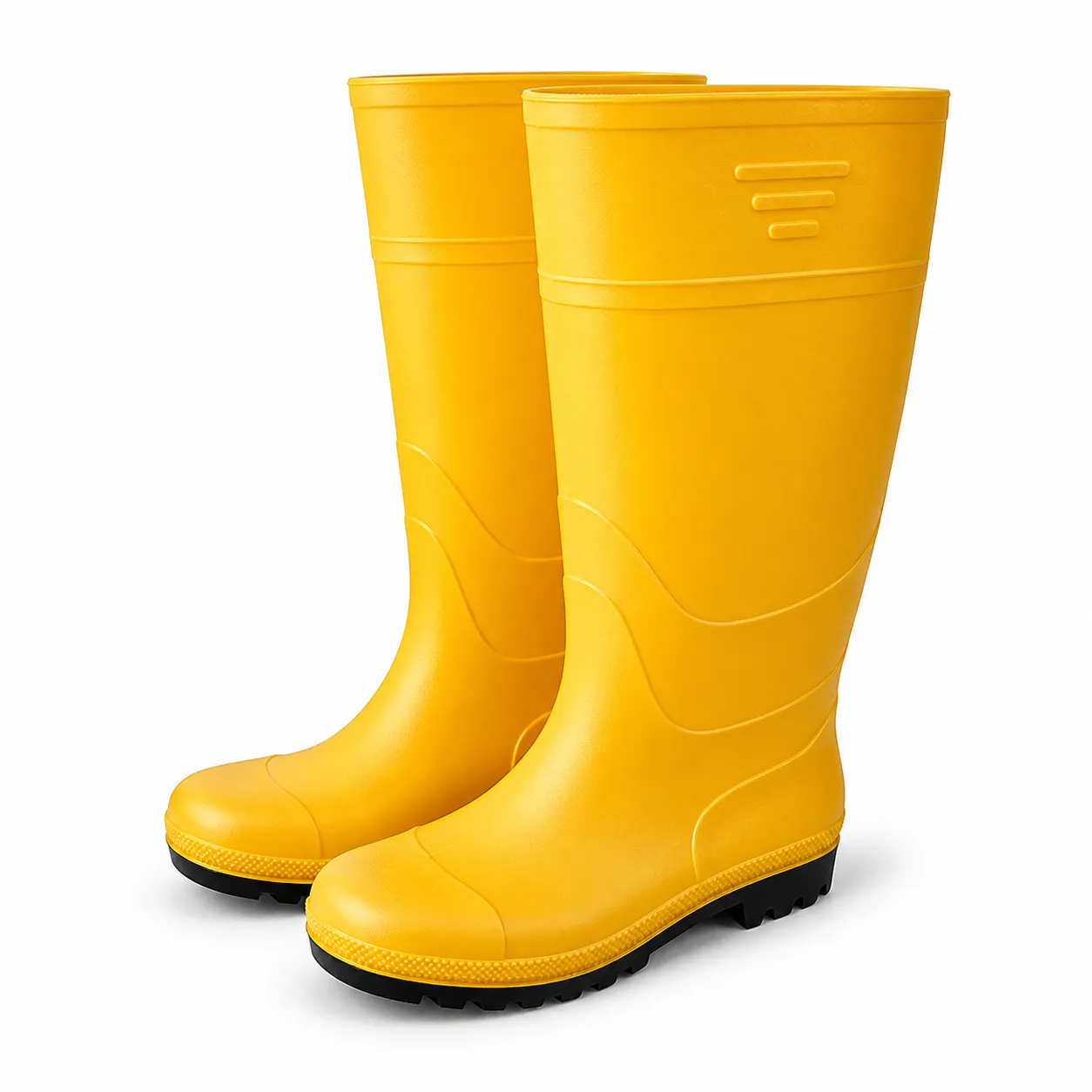
Footwear should cover the ankle. The yellow PVC boots (RD$ 800.00) work in the apiary and the extraction room, and they clean with water. Texas A&M says suit legs are worn outside the boots, not tucked in; Mississippi State mentions tucking pants into boots as another way to seal the opening. Pick one of the two and seal it well with tape or elastic.
What do I need at my experience level? A table
You do not need to buy everything on day one. This table is our recommendation, built from the sources and from our catalog; adjust it to your apiary.
| Level | Essential | Recommended | Optional |
|---|---|---|---|
| First year | Full suit or jacket with veil plus light pants; boots or closed shoes; tape or elastic | PVC boots, smoker, a cap and headband under the veil | Criollo hat; leather gloves |
| Second year, calm colonies | Jacket with zip-on veil and light pants | A spare suit so one can be washed while you use the other | Leather gloves for harvest or difficult colonies |
| Experienced or several apiaries | A well-fitted veil and light clothing | Criollo coverall or a spare suit per apiary | Ventilated garments, leg covers |
| Defensive colonies | Full suit with zip-on veil, closed footwear and full sealing with tape | Gloves; a second person to help | Replacing the queen (see below) |
If you are putting the whole kit together, see also the full first-year budget and the guide to getting started in beekeeping.
A checklist before every inspection
Two minutes before you open the hive prevent most surprises. This list follows the recommendations of Texas A&M and Mississippi State.
- Check the suit: no holes, tears, worn spots or damaged zippers. Texas A&M suggests covering small holes in the veil with flexible or silicone glue.
- Close everything: zippers, Velcro and ankle straps.
- Seal the openings at wrists, ankles and neck with elastic or tape; bees can get through very small gaps.
- Check the veil: it must not touch your face and you must see well on all sides.
- Light clothing without sharp contrasts: long sleeves, no dark belts or straps showing.
- Boots on and suit legs outside, or pants tucked in and sealed.
- Smoker lit and with spare fuel. Keep it away from the fabric: Texas A&M warns that suit and glove materials are flammable and can melt or smolder if the smoker or its embers touch them. See our smoker guide.
- Water and a plan: know how long you will be out and where to close up if the colony turns aggressive.
How do I wash and care for beekeeping clothing?
Wash it often, by hand or on a gentle cycle, with unscented detergent, and dry it in the shade. Mississippi State says dried venom on unwashed clothing can trigger defensive responses from the bees.
- Take off the veil before washing. A veil with a hole is a risk, so wash it by hand.
- Zip the zippers and empty the pockets.
- Use a mild, unscented detergent and skip fabric softener, because bees are very sensitive to smells. Be careful with bleach: according to a retailer we opened (Carolina Honey Bees), it can break down the cuff elastic.
- Hang it to dry; do not use a dryer, which can shrink or damage it.
- When not in use, hang it so it can air out: Texas A&M warns that a folded suit may mold, which matters in a humid climate.
- Wash it apart from your family's laundry, because dried venom can cause allergic reactions in other people.
The sources do not agree on frequency. Texas A&M notes that some beekeepers prefer not to wash, to keep the smell of smoke, while others prefer clean suits; the retailer we cited suggests washing about twice a season. Our practical advice: wash after an inspection with many stings or when the suit smells strongly of sweat or venom, and no more than needed, so the elastic and the veil do not wear out.
To brush bees gently off clothing or a frame, the plastic bee brush (RD$ 450.00) or the wooden one (RD$ 400.00) are part of the basic kit. See the rest in clothing and protection.
Stings: what to do and when to see a doctor
If a bee stings you, remove the stinger by scraping it with the edge of a card or another straight-edged object, without using tweezers, and wash the area with soap and water. That is MedlinePlus guidance, which adds ice wrapped in a cloth, 10 minutes on and 10 minutes off.
Seek medical care right away if there is trouble breathing, swelling of the face or mouth, throat tightness, weakness, fainting or a bluish color, according to MedlinePlus. If your doctor has given you an emergency kit, use it. If you know you are allergic, talk to your doctor before working with bees; the UF/IFAS publication says an allergic person should not carry out honey bee removals, and stresses knowing whether you are allergic.
When protection is not enough: defensive colonies
If a colony chases you, stings you through the suit or follows you across the yard, the problem is no longer the clothing but the colony. Texas A&M recommends taping the zipper openings with 1-inch tape on non-gentle hives, and UF/IFAS acknowledges that an occasional bee may sting even through the suit.
- Close up and come back another day. With an agitated colony, do not keep opening. Return early, with smoke and full protection.
- Check the location. The University of Georgia advises against placing hives near penned animals, sidewalks, playgrounds or other high-traffic areas, and planting bushes or barriers around the edges of the apiary so bees fly above head height.
- Replace the queen. The same source recommends re-queening with European stock when a colony becomes unusually defensive.
- About Africanized bees. UGA states they are much more defensive than European bees and defend the nest up to about 100 yards (roughly 90 meters) versus 1 to 20 yards, and that this defensiveness is greater in warm regions. We found no source describing their presence in the Dominican Republic, so we make no claim about it; ask beekeepers in your area or your association.
For other colony risks, such as pests, see the varroa guide.
Frequently asked questions
What clothing does a beginner beekeeper need?
At minimum, a veil that zips to a jacket or suit, light and loose clothing, and closed footwear that covers the ankle. Texas A&M recommends starting with a full suit and stepping down once you know how you react to stings. Gloves are optional.
What color should a beekeeping suit be?
Light, preferably white or khaki. Mississippi State says light colors trigger less defensive behavior and that you should avoid black, dark blue and sharp contrasts, because areas with crisp borders receive more stings.
Can bees sting through the suit?
Occasionally. UF/IFAS acknowledges that an occasional bee may sting through the suit, and Texas A&M notes that a veil pressed to the skin allows stings. A loose size that keeps the fabric away from the skin helps reduce that risk.
How often should I wash my beekeeping suit?
Sources differ. Mississippi State recommends washing frequently because dried venom can trigger defensive behavior, and other guides suggest about twice a season. Wash after many stings, with unscented detergent, and do not use a dryer.
Do I need gloves to work with bees?
Not always. Mississippi State says they are usually not necessary, but you should keep a pair handy and new beekeepers should wear them until they feel comfortable. Thick gloves reduce dexterity, and tight ones can be stung at the knuckles.
Can the criollo hat replace the veil?
No. The criollo hat gives shade and comfort but does not protect the face from stings. Use it with a veil, not instead of one. Mississippi State recommends a veil for new beekeepers because stings to the face are especially painful.
What should I do if I am stung and feel unwell?
Scrape out the stinger, without tweezers, and wash with soap and water. If you have trouble breathing, swelling of the face or mouth, throat tightness, weakness or dizziness, seek medical care right away, as MedlinePlus advises.
Sources
- Keck, M. (2021). Beekeeping equipment: protective clothing (ENTO-097). Texas A&M AgriLife Extension. extensionentomology.tamu.edu
- Mississippi State University Extension (P3594). Beginning beekeeping in Mississippi. extension.msstate.edu
- O'Malley, M. K., Ellis, J. D. and Koehler, P. G. (2020). Eradication of swarms and colonies for pest control operators (ENY-145). UF/IFAS Extension. edis.ifas.ufl.edu
- University of Georgia Cooperative Extension. Africanized honey bees (Bulletin 1290). fieldreport.caes.uga.edu
- MedlinePlus. Bee sting. U.S. National Library of Medicine. medlineplus.gov
- Carolina Honey Bees. How to wash a beekeeping suit. carolinahoneybees.com
- La Tienda del Apicultor. Beekeeper protective clothing guide. latiendadelapicultor.com
Reference prices from the Quisqueya Hive catalog as of October 2026, subject to change. This guide is informational and does not replace medical advice.
Message us on WhatsApp and we will help you choose based on your experience, your size and your budget. Delivery in 24 to 48 hours on business days; shipping cost is quoted on WhatsApp.
0 Comments