
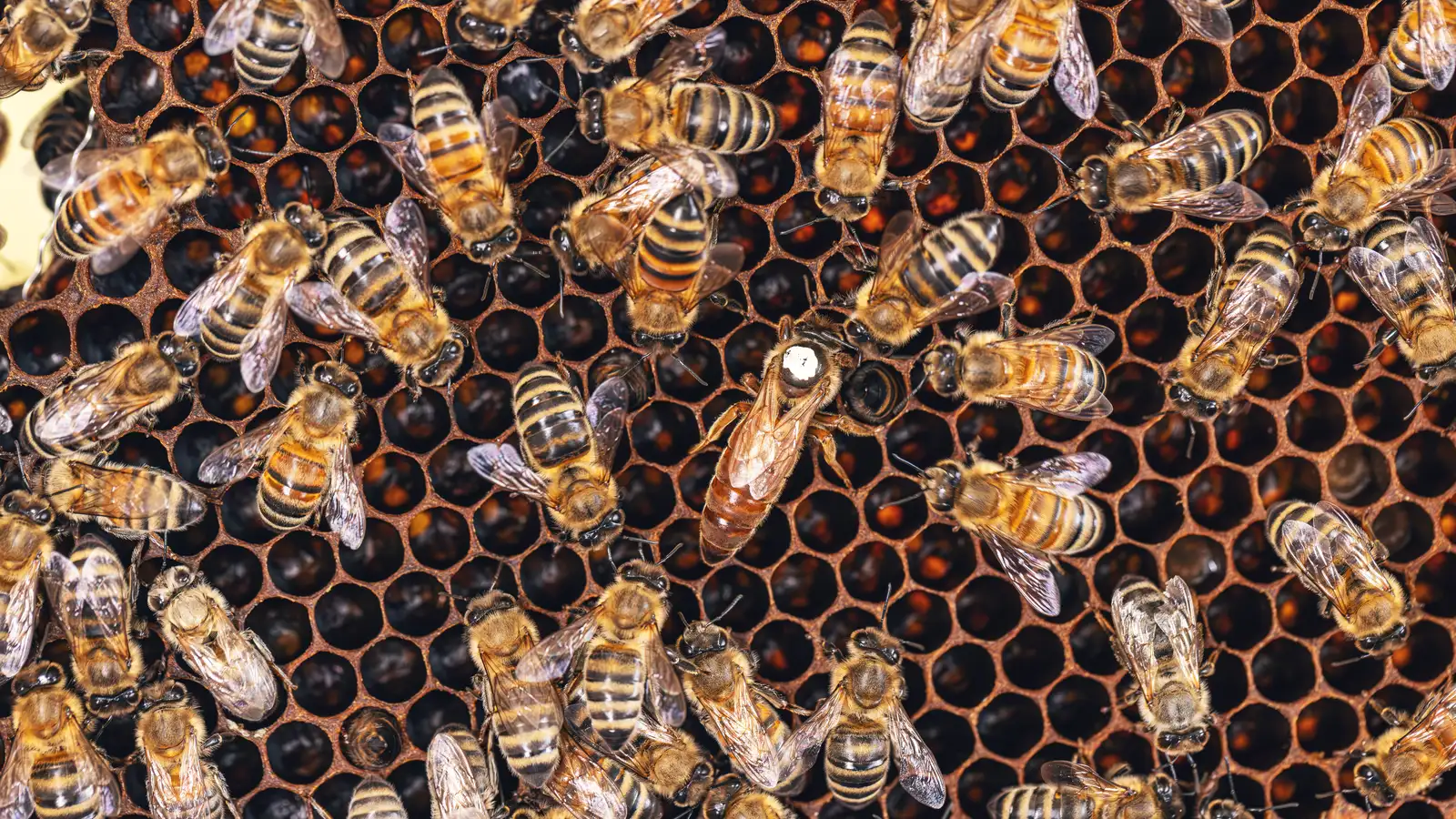
To raise a few queens you need a strong cell builder colony that is queenless (or has its queen kept below an excluder), very young larvae, cell cups, a grafting tool and small nucs where the new queens can mate. With larvae 12 to 18 hours old, the queen emerges around day 12 after grafting, and you cannot speed that calendar up or slow it down. This guide gives you the gear, the method and a day-by-day timeline built on university sources.
- It starts with the cell builder colony, not the cups. It needs plenty of nurse bees, plenty of food and no queen or queen cells of its own. Many failures come from picking a colony that is too small.
- Larvae 12 to 18 hours from hatching. Older larvae can be used, but some of the queens come out of inferior quality.
- Two routes: grafting with a tool (Chinese Queen Grafting Tool) or the Nicot system (Nicot Queen Rearing System), where the queen lays straight into the cups and you move no larvae.
- The calendar rules: set up the builder on day -1, graft on day 0, check on days 1 to 3, remove the cells on day 11, before they emerge.
- Each new queen needs her own nuc (4‑Frame Langstroth Nuc Hive in American Pine) and drones in the area. Plan before you start.
How do you raise queen bees, and why does it work?
Queen rearing means giving the bees very young larvae in conditions where they choose to feed them as queens. It works because the bees already do it by instinct: when a colony loses its queen, the drop in queen pheromone usually leads the workers to build emergency queen cells to replace her.
Wilkinson and Brown, of the UK Central Science Laboratory, explain that beekeepers commonly transfer very young worker larvae into artificial cups and give them to a queenless colony to accept and feed. Bees also rear queens naturally when they replace a failing queen (supersedure) or prepare to swarm.
A useful point from North Carolina State University (NC State): rearing queens takes three things, no mother queen or queen cells in the colony, lots of nurse bees and ample food. Their rule of thumb is about 200 workers per queen cell. If your builder has no bees to spare, do not give it many cups.
This is propagating queens in a systematic way, which is not the same as breeding for genetics. If you want to select traits, pick a gentle, healthy colony as the source of the larvae. We sell equipment, not queens or genetics, so here we only help with the gear.
What gear do you need to raise queens? A checklist with our products
You need five groups of gear: cups, a grafting tool (or the Nicot system), cages, nucs and, if you use the method with the queen below, an excluder. This is what we have in the catalog.
| What it is for | Product | Reference |
|---|---|---|
| Plastic cup for grafting | JZ/BZ Plastic Queen Cell Cup | RD$ 15.00 |
| Brown cup of the Nicot system | Brown Nicot Queen Rearing Cell Cup | RD$ 15.00 |
| Graft-free system | Nicot Queen Rearing System | RD$ 800.00 |
| Cups made of wax | Queen Cup Mold | RD$ 400.00 |
| Grafting, flexible tip | Chinese Queen Grafting Tool | RD$ 125.00 |
| Grafting, metal | Stainless Steel Queen Grafting Tool | RD$ 200.00 |
| Queen rearing cage | Queen Rearing Cage | RD$ 70.00 |
| Queen cages | Queen Bee Cage (Orange) and Queen Bee Cage (Small) | RD$ 20.00 / RD$ 25.00 |
| Catching or holding the queen | Butterfly Queen Catcher | RD$ 100.00 |
| Mating nuc | 4‑Frame Langstroth Nuc Hive in American Pine | RD$ 855.50 |
| More room for the nuc | 4-Frame Nuc Super Box, American Pine | RD$ 590.00 |
| Keeping the queen apart from the brood | Queen Excluder (Aluminum), Plastic Queen Excluder for Beehive, Queen Excluder (Galvanized) | RD$ 295.00 / RD$ 275.00 / RD$ 400.00 |
You also need what you already use in the apiary: the basic equipment, a smoker (how to choose and use it), a flashlight or headlamp to see the larvae and a damp towel to cover the frames. See everything in beekeeping tools. Nucs and supers are under hives.
Which is better, JZ/BZ cups or Nicot cups?
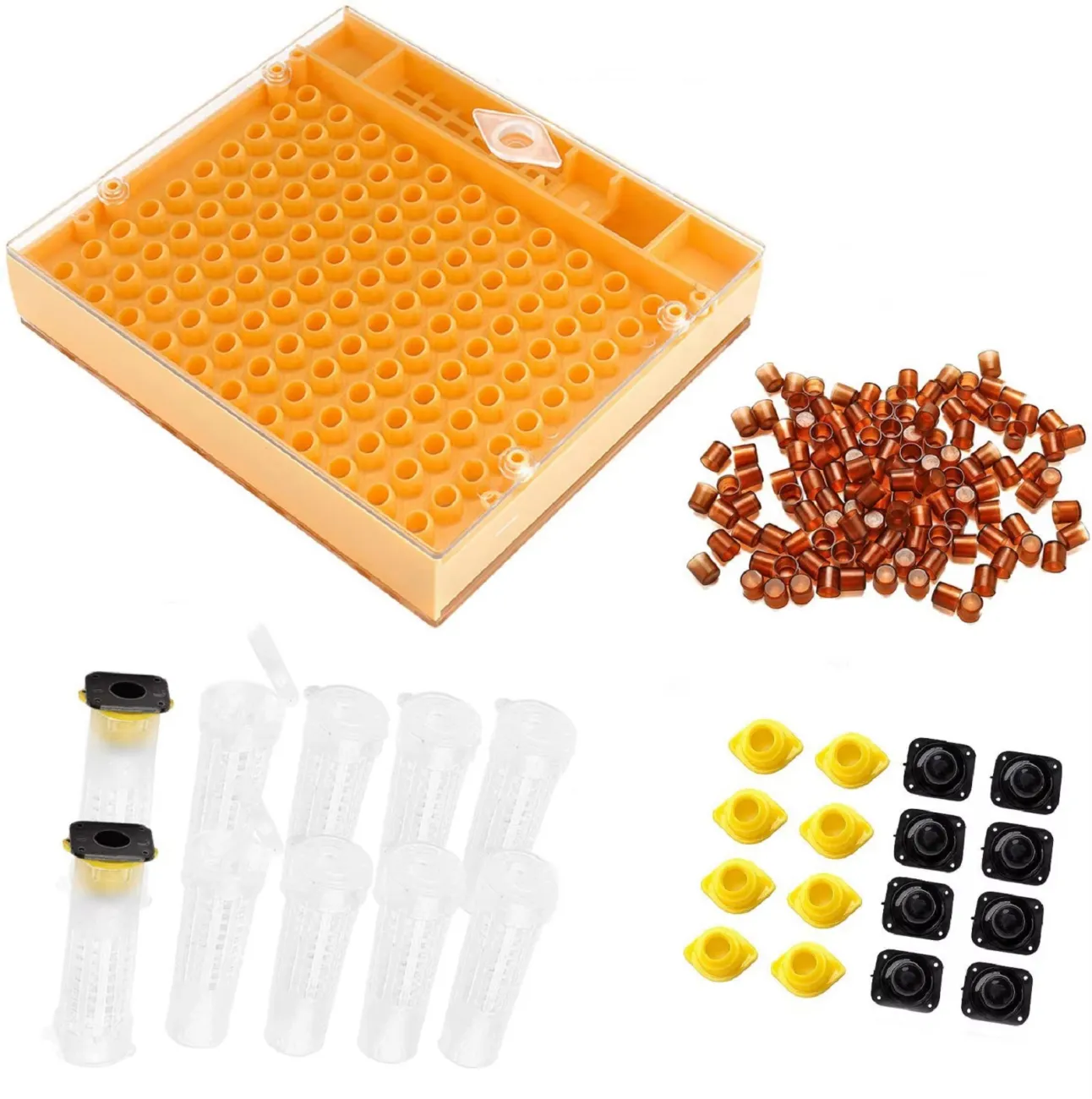
There is no better cup in general: it depends on the method. JZ/BZ plastic cups are used for grafting; the brown cups of the Nicot system receive the eggs directly. Choose by whether you want to learn to move larvae or would rather avoid it.
JZ/BZ cups and grafting
A Penn State Extension guide explains that grafting is moving a larva from its cell into a manufactured cup, and that it lets you make any number of cells that are easy to handle and transport. Plastic cups with a base mount are pushed into a grooved bar that goes in a frame. Wilkinson and Brown name "JZ s BZs" plastic cups pushed into cuts in the cell bars. The downside: it takes patience, good eyesight and a steady hand.
Nicot system
Penn State describes Nicot and Jenter as graft-free systems: you confine the queen in a box set on a brood frame, and she lays directly into a 10 by 11 grid of removable brown cups. Workers enter and exit the box freely to care for the queen and the young larvae. When the eggs hatch, you move the cups to holders on a cell bar and give it to the cell builder. The guide says these methods work for small-scale production. It is a good option if you do not want to graft; the rest of the list (builder, nucs) is the same.
Wax cups
Penn State also says some beekeepers make their own cups from wax. If you want to, the queen cup mold (RD$ 400.00) is for that. We have not measured whether wax cups do better or worse than plastic, so we make no claim.
Which grafting tool should you use?
To start, the flexible-tip Chinese style is usually easiest because it lifts the larva together with its bit of jelly. The metal tool takes more practice and is used with primed cups.
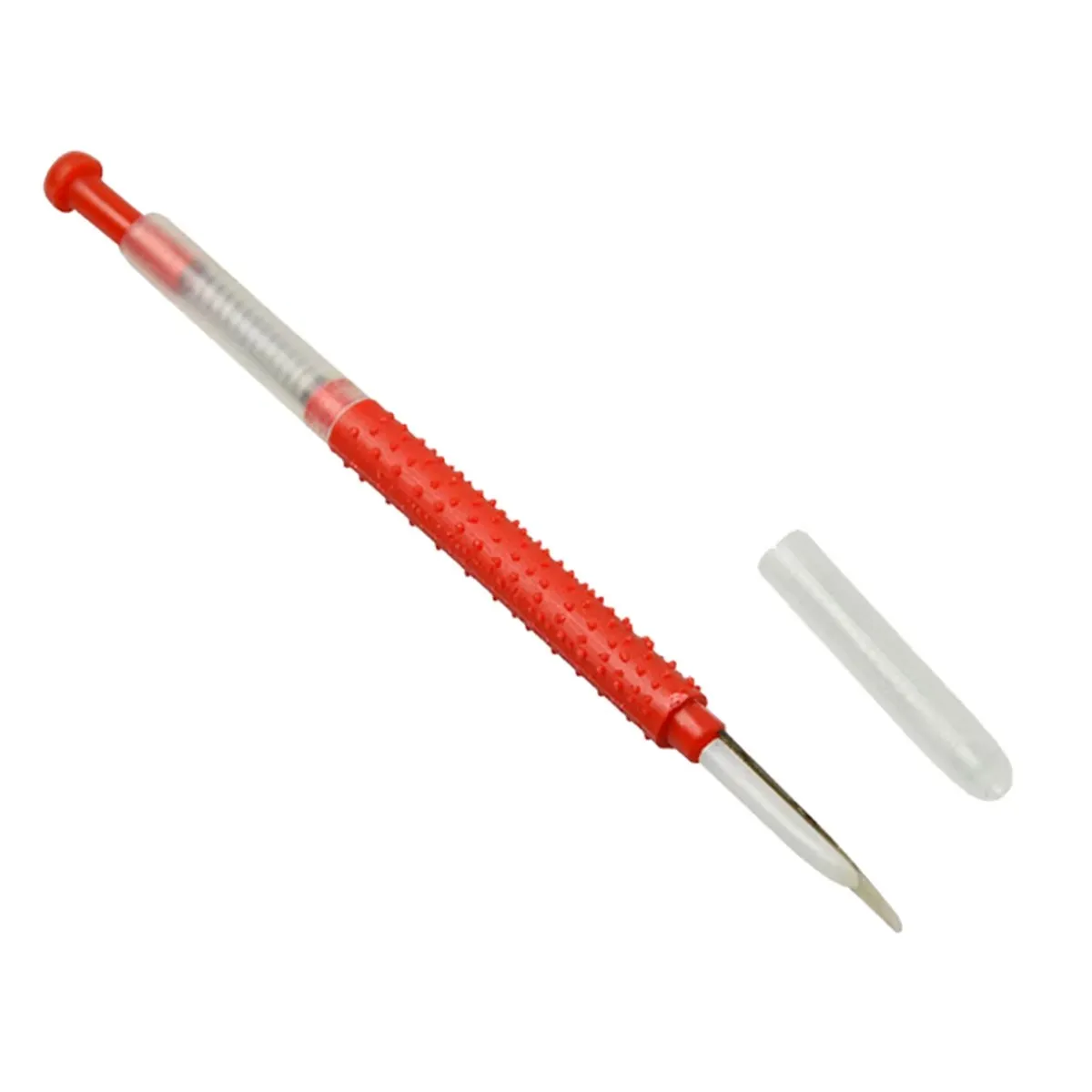
According to Penn State, the Chinese tool has a pliable tip that slides under the larva and jelly, with a spring mechanism that drops them into the cup; it does not require priming the cups and is common in commercial operations. The German tool is stainless steel, looks like a dental instrument, is about as long as a pencil and gives a lot of control and visibility. Wilkinson and Brown say good acceptance has been obtained with a metal tool or a fine wetted paintbrush, although the Chinese tool also moves a bed of jelly.
In our catalog you will find the Chinese-style grafting tool (RD$ 125.00) and the metal grafting tool (RD$ 200.00). For a few queens, one tool is enough.
How do you prepare the cell builder or starter colony?
The builder must have lots of nurse bees, plenty of food and no queen or queen cells of its own with larvae about to hatch. If the colony is small, the cells get abandoned, so strength comes first.
Two ways are backed by the sources:
- Queenless builder (starter). NC State sums up the options: a split from a strong hive, a Cloake board or a "swarm box". The swarm box is prepared by shaking young bees in at least 24 hours before grafting, with no open brood and with food; just before grafting you remove a frame of open brood to leave a gap for the graft frame. Start feeding a few days earlier.
- Queenright builder. Wilkinson and Brown describe a very strong colony with the sealed brood above an excluder and the queen with the open brood below. The graft frame goes above, next to young brood and pollen that attract nurse bees. It was done with colonies of about 20 combs of bees, so it is for big colonies. In their series of 6,666 grafts the acceptance was 81%.
With a few hives, the more realistic option is the queenless builder made from your strongest hive. If there is no nectar flow, Wilkinson and Brown simulate one with 1 to 2 liters of 60% syrup per week (1 kg of sugar per 650 ml of water). If you use the queen-separated method, we have the aluminum excluder (RD$ 295.00), the plastic one (RD$ 275.00) and the galvanized one (RD$ 400.00).
How do you graft step by step?
Cover everything with a damp towel, work fast in a warm room with no draft, and move only small larvae, barely curved like a comma. Here is the order.
- Prepare the cup frame. Wilkinson and Brown put the frame with empty cups in the builder 8 to 24 hours before, so the bees polish and warm them.
- Choose the donor frame from a vigorous colony. Look for day-old larvae, very small, on frames that also have eggs and older larvae. Brush the bees off gently; do not shake them.
- Protect the larvae. They dry out, chill and go hungry fast without nurse bees. Penn State recommends a damp towel over the part of the frame you are not using, and a warm room with no draft. Wilkinson and Brown ask for shelter from sun and wind.
- Move each larva. Approach from the outside of the "C" curve, slide the tool under the larva and its jelly and set it in the center of the cup. A damaged, submerged or badly placed larva will not survive.
- Return the frame to the builder soon. Penn State says that once started you should handle the cells gently and not invert them again while they develop.
If you use cups without jelly, Penn State says many beekeepers prime them with a little water or diluted jelly, which prevents drying, but too much liquid drowns the larva. With the Chinese tool it is not needed.
How old should the larvae be, and when do you do this?
Use larvae 12 to 18 hours from hatching from the egg. That is the Wilkinson and Brown range: it gives the larva the maximum time to be reared as a queen and it is still large enough to graft. Older larvae are possible, but some queens may be of inferior quality.
To get plenty of larvae of the right age, these authors suggest caging the mother queen overnight on an empty comb, four days before grafting.
What season? The sources we opened are from the UK and the US; we found no Dominican guide with dates. What they do say: do it when pollen and nectar are plentiful and colonies are strong. NC State adds that you need a drone source: 1 to 2 drone frames per brood chamber, and capped drone brood when you graft. Check your own local flow and do not rush if your hives are not strong yet.
Day-by-day timeline, from grafting to queen
This is the element you will use most. Days count from grafting (day 0). It combines the Wilkinson and Brown calendar with the NC State one; where they differ, we say so.
| Day | What to do | Source |
|---|---|---|
| -1 | Set up the cell builder; 8 to 24 hours before, add the frame with empty cups. | NC State; Wilkinson and Brown |
| 0 | Graft larvae 12 to 18 hours old. Return the frame to the builder soon. | Wilkinson and Brown |
| 1 to 3 | Check acceptance without shaking. Accepted cells have extended walls and the larva floats in jelly. | Wilkinson and Brown |
| 5 to 6 | The cells get capped. Write the date down. | NC State |
| 6 to 7 | If you reared with the queen above, shake the bees off each brood frame and destroy emergency cells. | Wilkinson and Brown |
| 11 | Remove the cells from the builder, one day before they emerge, and put them in queenless nucs right away. | Wilkinson and Brown |
| 12 to 13 | The NC State calendar puts the cells in nucs on day 13. The two sources differ by a day or two; when in doubt, take them out earlier, on day 11, so they do not emerge in the builder. | NC State |
| 26 or more | Check whether the queen has started laying. | NC State |
The full development figures, from the SARE life cycle sheet: queen 3 days as an egg, 5.5 as a larva and 7.5 as a pupa, for 16 days from egg to adult (worker 21, drone 24). If your cells were capped on day 5 or 6, you are on track.
NC State stresses it: pull the cells before the queen is born. If the first to emerge is loose in the builder, she can destroy the rest or confuse you next time.
How do you care for the cells and the mating nucs?
Handle them gently, always upright and never upside down. If they will be out for a while, keep them warm. NC State recommends a temperature-controlled container, for example a hot water bottle in a cooler, and checking with a light that the cell is occupied. Only one cell is needed per nuc.
NC State says any queenless unit works, of any size: small nucs, 5-frame nucs or splits. A 4-frame nuc (RD$ 855.50) with its nuc super (RD$ 590.00) fits. To move the nuc into a full hive, see the hive boxes.
After emergence, NC State says the queen becomes sexually mature at 4 to 7 days and mates in the afternoons in good weather. Do not open the nuc for about 2 weeks, except to see that she emerged. If you see eggs late, do not overreact, but do not wait until laying workers appear. A brood nest of only drones is a failed mating.
Cages, introduction and acceptance
Cages are for holding cells or queens until you introduce them. A mated queen is introduced in a cage and released once the colony accepts her.
- NC State recommends removing the old queen 1 to 2 days before the new one goes in.
- Do not expose cells or cages to direct sun or extreme weather for long.
- Allow 3 to 5 days before release, which improves acceptance.
- Disturbing the colony can make the workers "ball" the queen, which can injure her.
We have the queen rearing cage (RD$ 70.00) and the orange (RD$ 20.00) and small queen cages (RD$ 25.00). The queen catcher (RD$ 100.00) helps you hold her without touching her by hand. NC State warns that queens kept in cages for a long time can damage their feet; cages are for short use.
Should you mark the queen?
Marking is optional, but it makes her easier to find. Put a single dot of safe paint on the center of the thorax; nothing on the head, wings, legs or abdomen. According to Lappe's, the international code by the last digit of the year is: 1 or 6 white, 2 or 7 yellow, 3 or 8 red, 4 or 9 green, 5 or 0 blue. A 2026 queen would be white.
The same source says never to squeeze the abdomen, to wait for the paint to dry before release and to pick a calm day, with no defensive colony or robbing. And remember: color does not prove age or that the queen is fertile; keep a record.
Common mistakes when raising queens
- A weak cell builder. Wilkinson and Brown say many fail at the outset because of this.
- Larvae that are too old. Beyond the 12 to 18 hour window, quality drops.
- Dried-out or chilled larvae. Without a damp towel or a sheltered spot, they die before reaching the builder.
- Leaving emergency cells. A loose virgin ruins the batch.
- Taking the cells out late. If they emerge in the builder, they are lost.
- Tilting the cells. Penn State says not to invert them once the process has started.
- Opening the nuc too soon. NC State asks for about 2 weeks.
- No drones. Without good drones, mating fails.
- Starting without a plan. NC State reminds you that no step can be skipped. Rearing queens is not wise if your colony is sick; read the varroa guide first.
Frequently asked questions
How many days does it take for a queen to emerge?
From the egg, 16 days: 3 as an egg, 5.5 as a larva and 7.5 as a pupa according to SARE. Counting from grafting with larvae 12 to 18 hours old, the cells come out on day 11 and the queen emerges around day 12.
How old should the larva be for grafting?
12 to 18 hours from hatching from the egg, according to Wilkinson and Brown. With older larvae you can still rear a queen, but some may be of inferior quality. Choose the smallest ones, barely curved like a comma.
Do I need the Nicot system or can I graft?
Either one. Grafting takes practice, a steady hand and good eyesight; Nicot avoids moving larvae because the queen lays in the cups. For both you need the same cell builder colony and the same nucs.
How many cells should I put in?
Few. NC State estimates about 200 workers per cell, and Wilkinson and Brown used batches of 12 to 24 cells. With a medium colony, start with a few cups and go up as you see the acceptance.
Can I rear queens if I am not a commercial beekeeper?
Yes. NC State presents it as a way to save the cost of buying queens, to act ahead of time and to understand the hive better, but warns that it takes practice, patience and that no step can be skipped.
How long until the new queen starts laying?
She becomes sexually mature at 4 to 7 days and mates on afternoons with good weather. NC State suggests not opening the nuc for about 2 weeks; its calendar counts day 26 or later to check whether she is laying.
Sources
- Wilkinson, D. and Brown, M. A. (2002). Rearing queen honeybees (queen rearing in queenright colonies). American Bee Journal, April 2002. Central Science Laboratory, National Bee Unit. nationalbeeunit.com
- Tarpy, D. R. and Keller, J. Collective Queen Rearing (BEES Academy). North Carolina State University. projects.sare.org
- Anton, K. and Grozinger, C. (2023). Queen cell production: grafting and graft-free methods. Penn State Extension, Center for Pollinator Research. pollinators.psu.edu
- SARE. The life cycle of honey bees. North Central Region SARE. projects.sare.org
- Lappe's Bee Supply. How to mark a honey bee queen. lappesbeesupply.com
Reference prices from the Quisqueya Hive catalog as of October 2026, subject to change. We sell equipment, not queens. This guide is informational.
Message us on WhatsApp and we will help you build the list for the number of queens you want to rear. Delivery in 24 to 48 hours on business days; shipping cost is quoted on WhatsApp.
0 Comments