
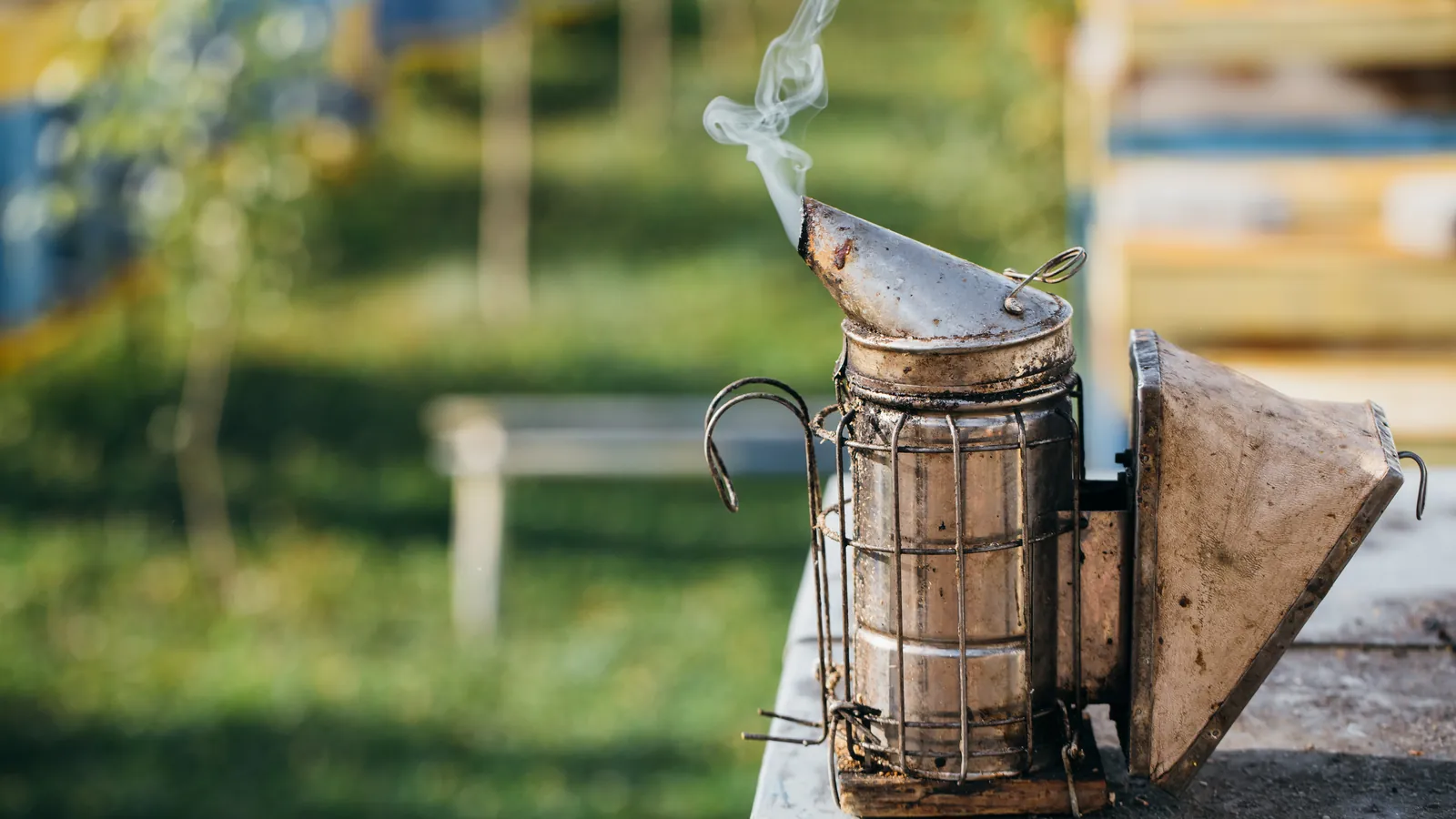
The smoker is the tool that cuts stings the most during an inspection: cool smoke calms the colony long enough for you to open the hive and work the frames. To choose one, look at the size of the fire chamber, the bellows and burn protection; to use it well, you need clean fuel, the fire under the load, and cool white smoke, never hot. This guide explains what smoke does according to research, how to pick a model, how to light it step by step and how to avoid fires.
- Smoke does not put bees to sleep. It lowers defensive behavior and, per research, temporarily dulls their sense of smell. Exactly why it works is still debated.
- Clean, dry fuel: untreated burlap, dry leaves, pine needles, plain cardboard, untreated wood shavings. Never plastics, synthetic fabrics, treated wood or liquid accelerants.
- Light with the flame under the fuel, add the load a little at a time, and check that the smoke comes out cool and white before you approach the hive.
- For 1 to 5 hives the Dominican smoker (RD$ 1,652.00) or the medium stainless steel smoker (RD$ 2,100.00) works. For long sessions or many hives, the large one (RD$ 2,300.00).
- Safety: never leave it lit and unattended, rest it on a hive lid, and put it out completely with water before storing it.
What does a smoker do and why does it work?
Smoke reduces the colony's defensive behavior and lets you handle frames without getting stung. That is the practical answer; the scientific one is more nuanced, and it helps to separate what is known from what is repeated without proof.
What the research says
- Effect on smell. A classic electroantennogram study (Visscher and colleagues, 1995) found that smoke reduced the antennae's response to both alarm pheromones and a floral odor. The authors concluded that smoke temporarily interferes with smell in general. A popular-science summary says antennal response recovers within 10 to 20 minutes.
- The popular explanation is incomplete. It is common to say smoke "masks" the alarm pheromone. A 2018 study in the Journal of Insect Science suggests smoke may instead reduce the release and spread of the pheromone: in individual bees given an electric shock, smoke did not change sting extension, but it did reduce release of the venom droplet at several voltages. The authors call this a hypothesis needing more testing, and note that an electric shock is not a natural situation.
- Other hypotheses. Smoke may distract bees from the intruder or make them perceive a nearby fire, which leads them to ingest honey. These are presented as possibilities, not proven facts.
What smoke does not do
It does not put bees to sleep or remove the risk. Smoke that is too hot can hurt them, and too much smoke stresses them and can taint the honey. Treat smoke as an aid, not permission to work unprotected: keep wearing a jacket or suit with a veil, as we explain in the beekeeping equipment guide.
What parts does a smoker have and which matter?
Every hand smoker has the same basics: a chamber where fuel burns, a bellows that pushes air in from below, a lid with a nozzle where the smoke comes out and, depending on the model, a grid or shield that keeps your hand off hot metal. Air enters at the bottom, passes through the burning fuel and leaves through the nozzle, which is why the fire belongs under the load, not on top of it.
- Fire chamber. The bigger it is, the more fuel fits and the less often you refill in the middle of an inspection.
- Bellows. It should move enough air with one hand. If the material burns or cracks the smoker stops working, so a bellows covered in fire-retardant material is worth having.
- Nozzle. A conical nozzle focuses the smoke where you need it.
- Protective grid or heat shield. It prevents burns to your hand and clothes.
- Perforated base. It lets air reach the fire.
What types of smoker are in our catalog?
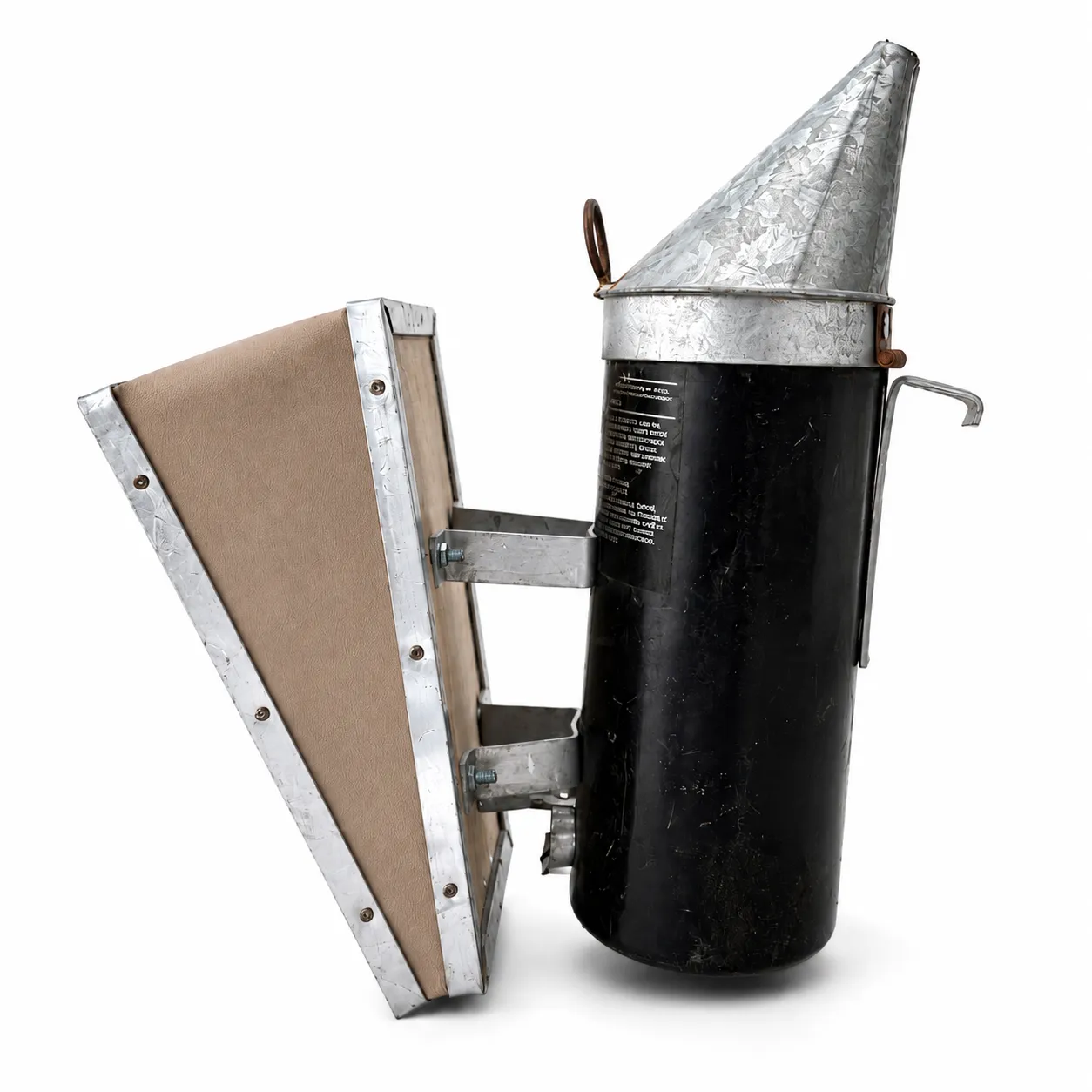
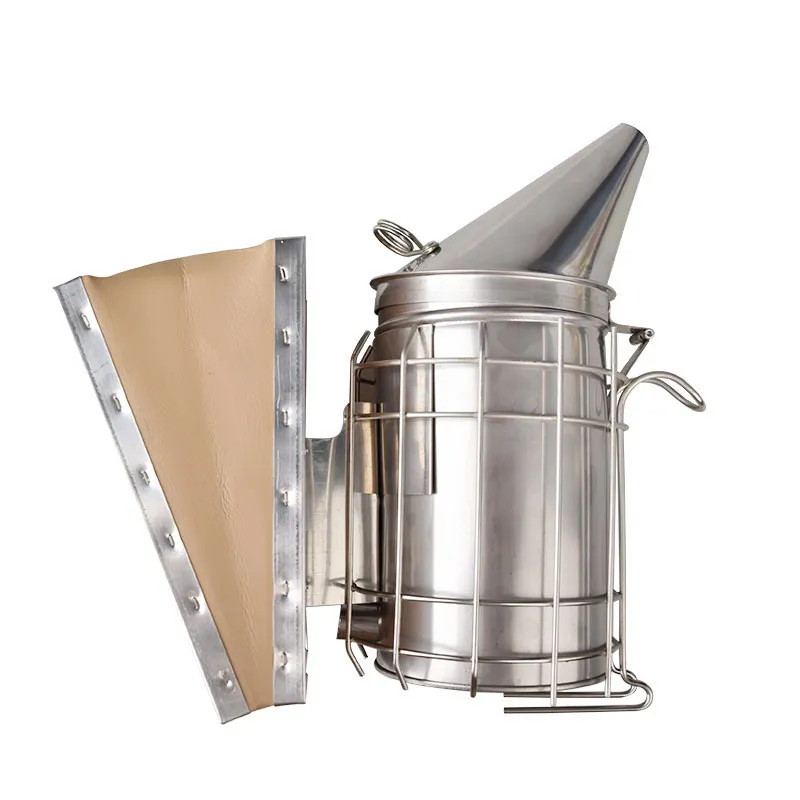
We offer three hand smokers with bellows. All burn natural fuels and work the same way; they differ in material, size and price.
- Dominican smoker (RD$ 1,652.00). Built by our team from a truck oil filter, which gives it a sturdy metal body. It has a conical nozzle and a side bellows. It is the least expensive of the three.
- Medium stainless steel smoker (RD$ 2,100.00). It measures 28 x 29 x 13 cm with a 10.5 cm diameter, a protective grid, a side hook for hanging it and a perforated base that keeps air flowing. The bellows is covered in fire-retardant synthetic leather.
- Large stainless steel smoker (RD$ 2,300.00). Larger than the medium, meant for long sessions or more hives.
Which smoker fits my apiary?
It depends on how many hives you check per session and how long you work at a stretch. This is our recommendation; the catalog does not list capacity in liters, so the comparison is relative size.
| Your situation | Recommended model | Why | Price |
|---|---|---|---|
| 1 to 3 hives, short inspections, tight budget | Dominican smoker | Lowest price in the catalog, sturdy body, made in our workshop | RD$ 1,652.00 |
| 1 to 5 hives, frequent inspections, you want a protective grid | Medium stainless steel | Grid, side hook and fire-retardant bellows cover | RD$ 2,100.00 |
| More than 5 hives or long back-to-back sessions | Large stainless steel | Larger: fewer refills during the session | RD$ 2,300.00 |
| Helpers or separate apiaries | One smoker per person or per apiary | No waiting, and no carrying fire between sites | By model |
If you are just starting, see the full first-year budget: the smoker is one of the five pieces in the minimum starter kit.
What fuel should I use in the smoker?
Use dry, natural, untreated material that gives cool, abundant smoke. The fuel must be clean: bees breathe what you burn and it can taint the honey.
| Fuel | What sources say | Burn time and temperature |
|---|---|---|
| Untreated burlap (jute) | Used as a smoke source in scientific studies; favored by beekeepers. Make sure it holds no oils or chemicals. | No measured data |
| Pine needles | The University of Georgia extension recommends them: easy to get, light well and give dense smoke. | No measured data |
| Dry leaves and dry grass | Listed as suitable fuels. | No measured data |
| Plain cardboard | Suitable if free of ink, labels, tape and adhesives. | No measured data |
| Untreated wood shavings, bark | Listed as suitable. The wood must be natural, with no paint or preservatives. | No measured data |
| Cotton, plant pellets | Commercial smoker products; pellets often need a special cylindrical container. | No measured data |
We looked for measured burn time and smoke temperature for each fuel in sources we could open and found no comparable data, so we left those columns without numbers rather than invent them. We also found no source on which fuels are easiest to get in the Dominican Republic. In practice, test them in your own apiary and keep what gives you cool smoke the longest.
What you should never burn
- Gasoline, diesel or other liquid accelerants.
- Synthetic fabrics and plastics.
- Glossy or colored paper, and treated, painted or glued wood.
- Anything contaminated with paint, preservatives, oil or glue.
- Green, damp material: it burns poorly.
- Improvised repellent mixes with chemicals: use only products made for that purpose.
How do you light a smoker? Step-by-step checklist
This is the checklist we use. Print it or keep it on your phone until it becomes habit.
- Inspect the cold smoker. Chamber, lid, bellows and base. Remove old ash and check that air flows.
- Pick a safe spot. A surface that will not burn, away from dry grass and leaf litter. A hive lid works.
- Prepare the fuel first and carry it in a bag, so you do not gather material from the ground with a lit smoker in your hand.
- Light a small handful (dry leaves or cardboard) and put it at the bottom of the chamber. The flame goes under the fuel, not on top.
- Squeeze the bellows gently several times until the flame strengthens.
- Add fuel little by little. When the top layer catches, keep loading until the chamber is full without packing it too hard: if you compress it, it goes out.
- Close the lid and pump until dense smoke comes out.
- Test the smoke away from the bees. It should be white and cool, with no flames or embers. If it is hot or thin, add fuel and wait.
- Set the smoker somewhere visible and stable, on a hive lid, never on grass. The hot base must not touch anything that melts.
- Carry spare fuel and a long lighter.
How much smoke do I use during an inspection, and when?
A little, at the right moment: a few puffs before opening and more only when the bees get restless. Too much smoke stresses the colony and can give the honey a smoky taste.
- Entrance. Give one or two gentle puffs at the entrance and wait a moment. Stand beside or behind the hive, out of the flight path of returning bees.
- Lid. Lift the lid slightly, give a puff and close it for a few moments before opening fully.
- Over the frames. Direct the smoke downward between the frames. The bees may buzz louder as they retreat; that is normal.
- During the work. If they get agitated, give a few more puffs. A popular summary of the research says the effect on the antennae lasts 10 to 20 minutes, so a long inspection will need repeats.
- Exposed honey. Do not smoke near exposed honey. We cover it in the harvest guide.
A smoked colony can still be defensive. If it gets very agitated or aggressive, close up and come back later with full protection.
How do I keep the smoker lit?
- Load it well at the start. A nearly empty smoker is the most common mistake: it dies just when you need it.
- Do not pack it. If air cannot circulate, the fire dies.
- If it starts to go out, open the lid carefully, stir the fuel and pump.
- Pump now and then while you work, even when you are not smoking.
- Watch the heat. If the smoke comes out hot, stop pumping, add fresh fuel and wait.
Safety: fires, burns and how to put it out
A smoker is a portable campfire. In the dry season, one slip can start a fire. These are the practices recommended by the sources we opened.
- Light it in a safe place, ideally an enclosed space or a truck bed, away from dry vegetation. In Spain, beekeepers in risky forest areas are asked to clear at least 3 meters around the apiary.
- Never leave it unattended. Rest it on the hive lid, not on grass, and keep an extinguisher or a container of water close (a Spanish beekeeping foundation recommends within 10 meters).
- Avoid the middle of the day and windy days, as Madrid authorities ask in high-risk periods. On a hot, windy day with dry grass, consider not lighting it at all.
- Spark-arresting grid and hot base. A grid reduces the risk but does not remove it. Keep the hot base away from polystyrene hive roofs and heat-sensitive surfaces.
- Protect your hands. The nozzle and body burn. Do not put your fingers in the fire or hold burning fuel.
- Put it out completely. When you finish, soak the fuel and ash with plenty of water in a metal bucket, or keep it closed in a sealed metal container until it goes out. Do not store it hot in a toolbox or carry it lit.
We found no Dominican rule specific to smoker use. The references above are from Spain and serve as good practice. Check with the Dirección General de Ganadería or your local association for restrictions in your area.
How do I clean and store the smoker?
With use, smoke leaves soot and tar (creosote) in the nozzle and chamber. If it builds up it reduces smoke output and capacity. Clean it only when it is out and completely cold.
- Empty the ash and scrape off the soot that blocks the nozzle or shrinks the chamber, taking care not to damage the bellows or grid.
- A spatula or the end of the long hive tool (RD$ 400.00) works for scraping; so does the short hive tool (RD$ 350.00). See the rest in beekeeping tools.
- Store it dry with the lid closed. In humid weather, moisture and rust hurt the bellows and the metal.
- Check the bellows: if it leaks air, replace or repair it before the season.
Common smoker mistakes
- Too much smoke or hot smoke: it stresses the bees and can hurt them.
- Wrong fuel: plastics, synthetic fabrics and treated wood release toxic fumes and can affect the honey.
- Nearly empty chamber: it goes out mid-inspection.
- Packing the load too tight: it cuts off the air.
- Smoking near exposed honey: the honey can take on a smoky taste.
- Dropping burning material or leaving the smoker unattended.
- Believing smoke is enough: without protection, one slip is a painful lesson. See the bee brush (RD$ 450.00) to move bees off gently instead of shaking them.
Frequently asked questions
What is a bee smoker and what is it for?
It is a container with a bellows where material is burned to make cool smoke. It lowers the bees' defensive behavior during an inspection so you can work the frames without getting stung. It does not put them to sleep and does not replace personal protection.
What is the best fuel for a smoker?
Dry, natural, untreated material: burlap, pine needles, dry leaves, plain cardboard or wood shavings. Look for white, cool smoke. We found no comparable burn-time measurements, so test what lasts longest in your apiary. Never use plastics or treated wood.
How do I keep my smoker from going out?
Fill it well at the start without packing the fuel, so air can circulate. If it starts to die, open the lid, stir the load and pump the bellows. Carry spare fuel and a lighter.
Does smoke harm bees or honey?
Hot or excessive smoke can hurt and stress bees, and too much can give honey a smoky taste. With cool smoke, in small amounts and from clean fuel, it is the standard way beekeepers work.
Which smoker should I buy if I have a few hives?
For one to five hives, the Dominican smoker is the least expensive and the medium stainless steel adds a protective grid and a fire-retardant bellows cover. The large one is for long sessions or more hives.
How do I put a smoker out safely?
When you finish, soak the fuel and ash with plenty of water in a metal bucket, or keep it closed in a sealed metal container until it goes out. Do not store it hot in a toolbox or carry it lit.
Sources
- Gage, S. L., Ahumada, F., Rivera, A., Graham, H. and DeGrandi-Hoffman, G. (2018). "Smoke conditions affect the release of the venom droplet accompanying sting extension in honey bees (Hymenoptera: Apidae)". Journal of Insect Science 18(4):7. pmc.ncbi.nlm.nih.gov
- ScienceFocus. "How does smoke subdue bees?". sciencefocus.com
- University of Georgia, College of Agricultural and Environmental Sciences. "How to light a smoker". bees.caes.uga.edu
- La Tienda del Apicultor. "Bee smoker: how to light it and use it safely". latiendadelapicultor.com
- La Tienda del Apicultor. "Cómo encender y usar el ahumador en la colmena". latiendadelapicultor.com
- Comunidad de Madrid (2026). "La Comunidad de Madrid supervisa el uso de ahumadores en apicultura para prevenir incendios forestales". comunidad.madrid
- Infoagro (2020). "Advierten del peligro de incendios que suponen los ahumadores apícolas". infoagro.com
- Pérez Ventosa, L. Fundación Amigos de las Abejas. "Uso del ahumador apícola en verano". abejas.org
Reference prices from the Quisqueya Hive catalog as of October 2026, subject to change. Smoker specifications come from the product listings. This guide is informational.
Message us on WhatsApp and we will help you choose based on how many hives you have. Delivery in 24 to 48 hours on business days; shipping cost is quoted on WhatsApp.
0 Comments